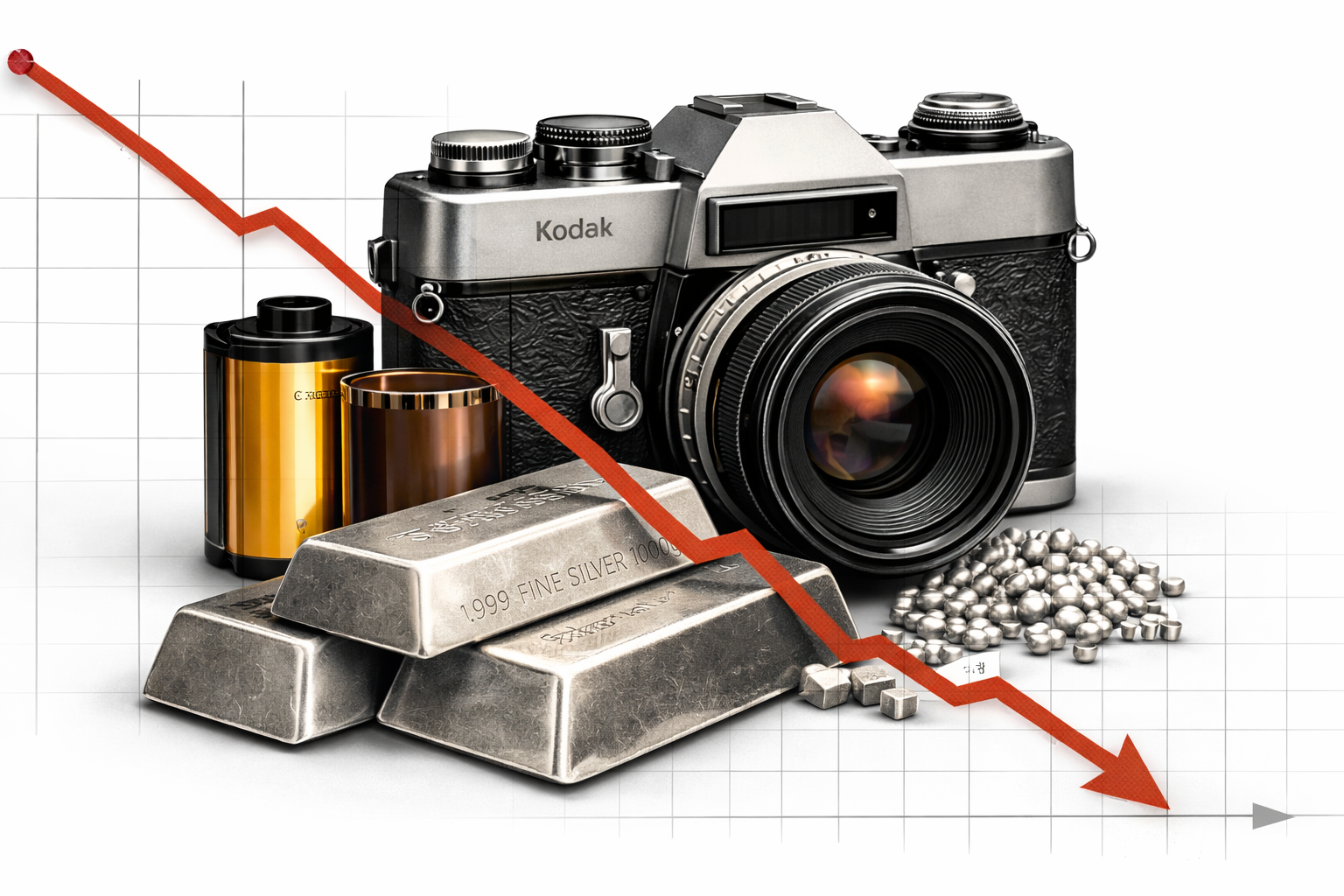
At its peak in the late 1990s, this single company stood as a pillar of industrial silver demand. The linkage was tight, predictable, and deeply embedded in the global commodities ecosystem.
Then digital photography arrived.
Almost overnight, film became obsolete. And with it, that massive, structural demand for silver vanished permanently—not because prices rose, but because technology changed the rules.
Few episodes illustrate more clearly how innovation can rewrite demand curves.
The Pattern
Kodak wasn’t an anomaly. History repeats this lesson across commodities:
– Coal lost structural demand in several economies as renewables and natural gas scaled up.
-Copper in telecom was partially displaced when fiber optics replaced traditional wiring.
In each case, demand didn’t decline gradually—it shifted regimes.
As Peter Drucker warned:
“The greatest danger in times of turbulence is not the turbulence—it is to act with yesterday’s logic.”
“What’s obvious is usually already priced in.”
By the time a demand story feels “safe,” its vulnerabilities are often invisible—or ignored.
Not all commodity demand is created equal.
-Industrial demand tied to a single technology can disappear forever.
-Investment demand tends to be cyclical, emotional, and reversible.
For long-term investors, the real edge isn’t predicting prices—it’s understanding what truly drives demand, and what could destroy it.